
Adhesion failures — a coating that peels, a laminate that delaminates, a bond that doesn’t hold — are among the most common and costly problems in manufacturing. Often the root cause isn’t the adhesive or coating itself, but the surface it’s being applied to. Plasma treatment addresses this directly by preparing the surface before bonding ever happens.
Why Surfaces Resist Bonding
Many industrial materials — particularly plastics such as polyethylene, polypropylene and PTFE — have naturally low surface energy. Liquids and adhesives bead up rather than spreading and wetting the surface, which weakens the resulting bond. Surface contamination from processing oils, mold release agents or handling adds a further barrier.
How Plasma Helps
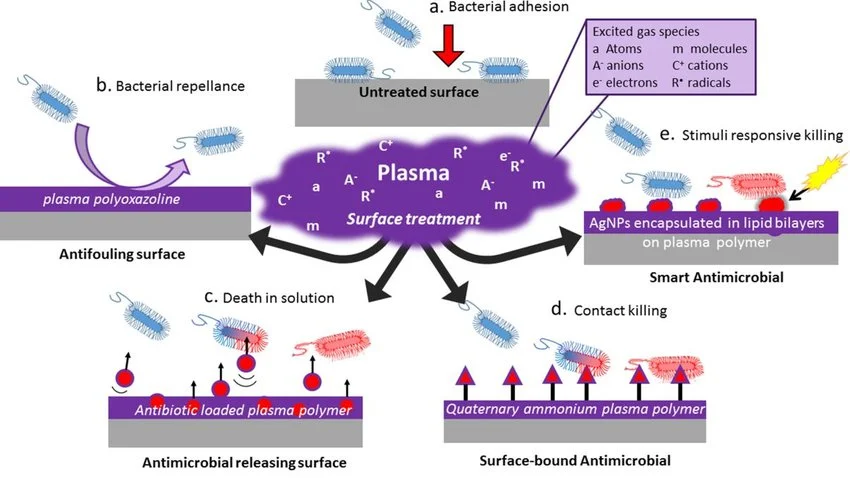
Plasma exposure raises surface energy by introducing polar chemical groups and removing weak surface contamination, allowing adhesives, inks and coatings to wet and bond far more effectively. The effect is highly localized to the surface, so bulk material properties, dimensions and appearance stay unchanged.
Typical Applications
- Pre-treatment before lamination or coating
- Preparing plastic components for adhesive bonding
- Improving print adhesion on films and packaging
- Bonding dissimilar materials in assembly processes