
Some manufacturing processes can’t tolerate the residues, solvents or handling risk that come with conventional wet chemical cleaning. Plasma cleaning offers a dry alternative that removes organic contamination at the molecular level, without introducing liquid chemistry into the process.
How Plasma Cleaning Works
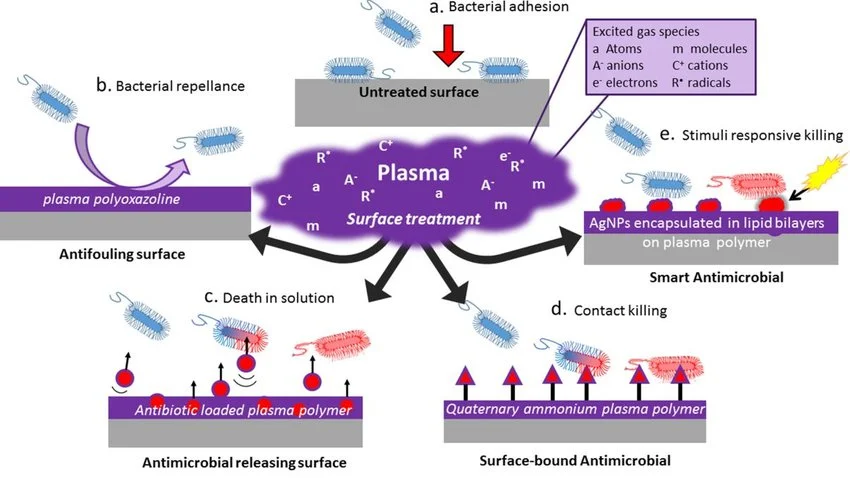
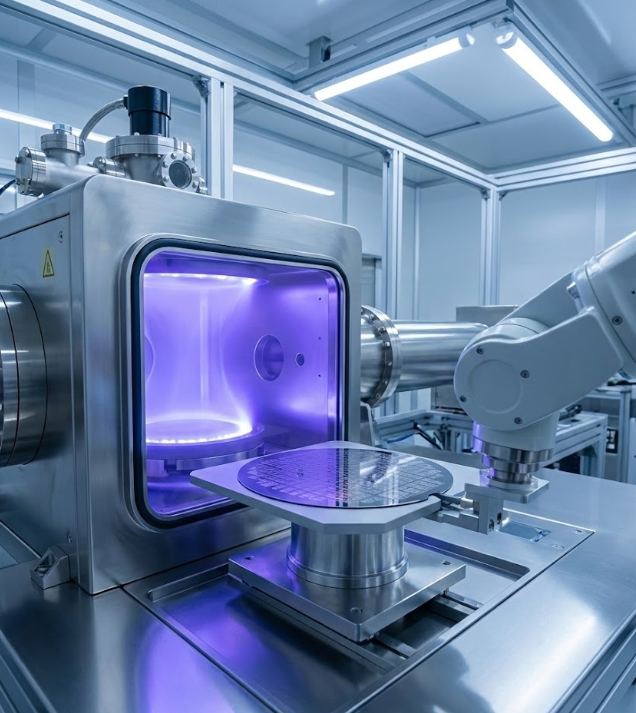
Reactive species generated in the plasma break down organic contaminants — oils, mold release agents, fingerprints, light residues — into volatile byproducts that are removed from the surface. Because the process is dry and doesn’t rely on solvents, it avoids the waste handling, drying steps and residue concerns associated with wet cleaning.
Where It’s Especially Valuable
- Cleaning ahead of bonding, coating or encapsulation steps
- Sensitive electronic components where solvent exposure is a risk
- Medical device components requiring controlled, residue-free surfaces
- Precision parts where dimensional tolerances rule out abrasive cleaning
For processes where cleanliness directly affects downstream yield — a subsequent bonding, coating or sealing step — plasma cleaning is often evaluated alongside or instead of traditional wet chemistry as part of a broader feasibility assessment.