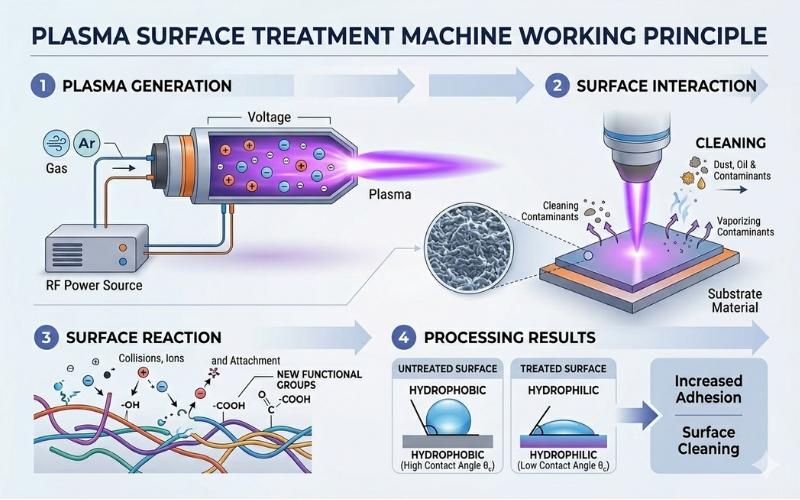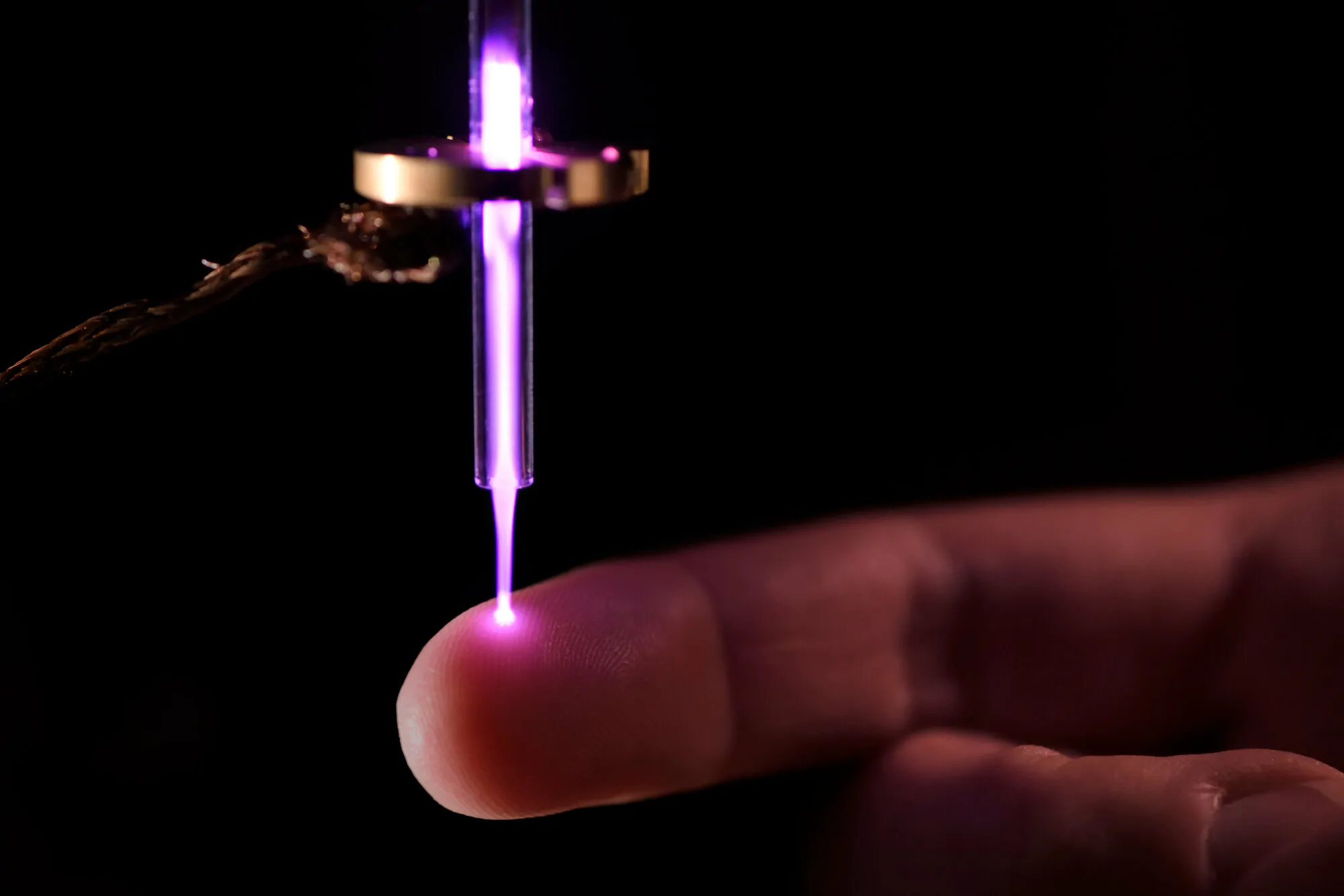

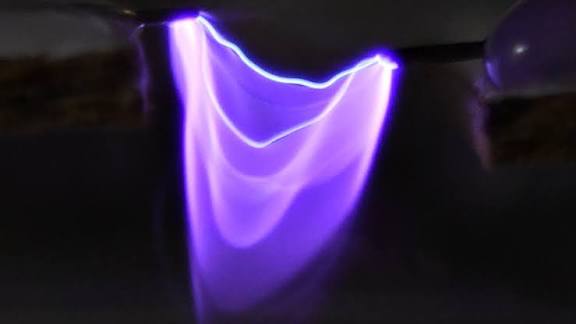
Plasma is often called the “fourth state of matter” — alongside solid, liquid and gas. It forms when enough energy is added to a gas that its atoms break apart into ions, electrons and reactive neutral species. Cold atmospheric plasma (CAP) is a specific type of plasma that is generated at or near room temperature and at normal atmospheric pressure, rather than requiring a heated environment or a vacuum chamber.
Why “Cold” Matters
In cold atmospheric plasma, the ions and electrons carry energy, but the overall gas temperature stays close to ambient. This is what makes CAP so useful for manufacturing: it can chemically activate or clean a surface without heating or damaging the underlying material — including plastics, textiles, biological tissue and other heat-sensitive substrates that would be destroyed by conventional thermal plasma.
Why “Atmospheric” Matters
Because CAP operates at normal atmospheric pressure, it doesn’t require the vacuum chambers, pumps and sealed systems that low-pressure plasma processes need. That generally means simpler integration into existing production lines, lower equipment complexity, and the ability to treat materials in a continuous, open-air process rather than a batch system.
Where It’s Used
- Surface activation before bonding, printing or coating
- Cleaning and decontamination of sensitive surfaces
- Improving wettability and adhesion on plastics and composites
- Selected biomedical and medical device applications
Cold atmospheric plasma is one of several plasma technologies we explore with manufacturing partners, depending on the material, process and performance requirements involved.