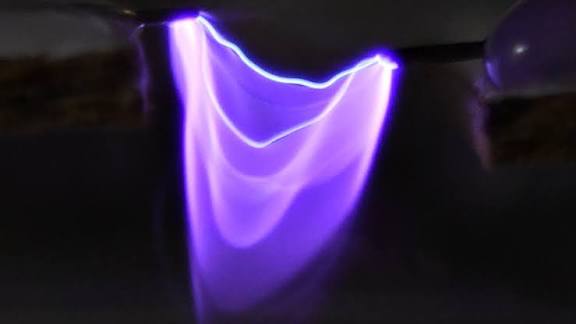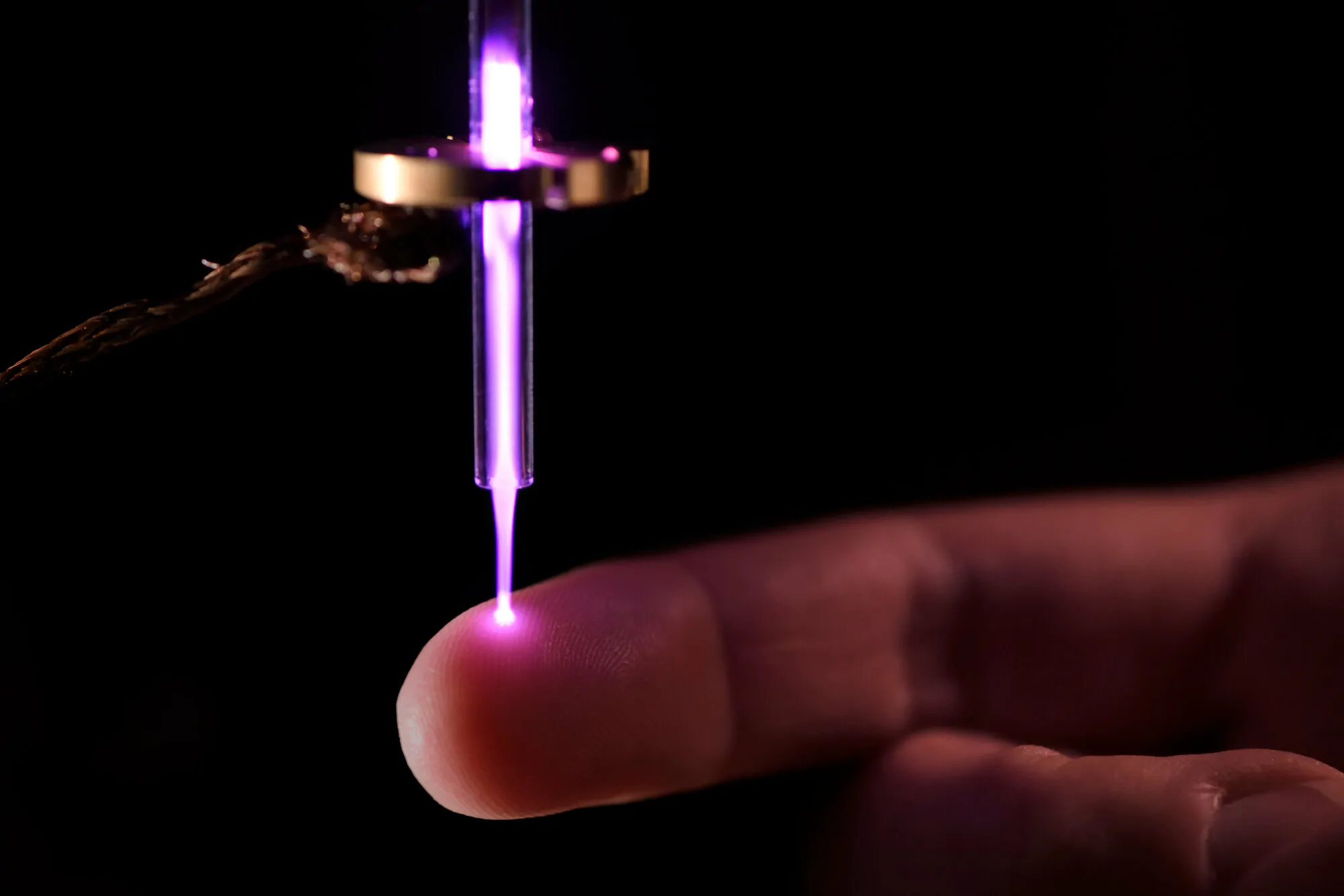

Plasma surface treatment is one of the most widely used industrial applications of plasma technology. Rather than changing a material throughout its bulk, it modifies only the outermost surface layer — typically just a few nanometers deep — while leaving the material’s core properties unchanged.
What Happens During Treatment
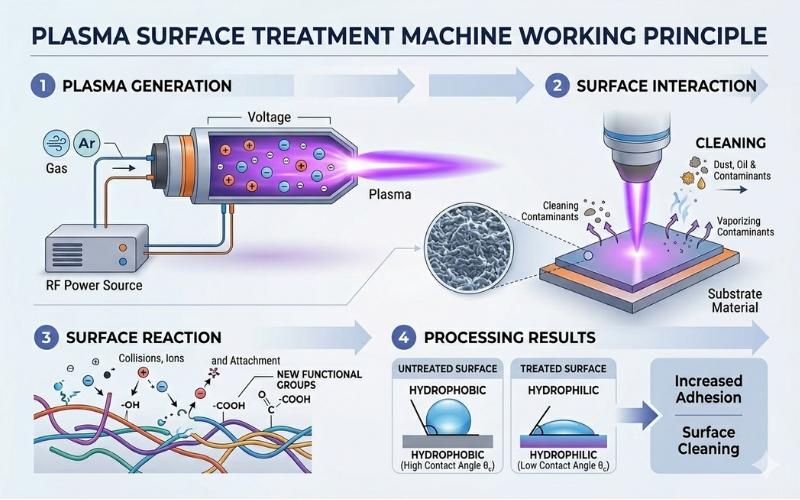
When a surface is exposed to plasma, reactive species interact with it in a few ways: removing loose contamination and weak boundary layers, breaking and reforming molecular bonds at the surface, and introducing new functional chemical groups. The combined effect changes how the surface behaves — how liquids spread across it, how well adhesives or coatings bond to it, and how it interacts with other materials.
Common Outcomes
- Increased surface energy and wettability
- Removal of organic contamination without wet chemistry
- Improved adhesion for inks, coatings and adhesives
- Activation of otherwise low-reactivity materials such as certain plastics
Why It Matters for Manufacturing
Many production defects — poor bonding, coating delamination, print adhesion failures — trace back to surface conditions that weren’t properly prepared. Plasma treatment offers a dry, fast and often more consistent alternative to chemical primers or solvent cleaning, without introducing hazardous waste streams.